
Day-Before Driving Test Checklist: Documents, Car and a Calm Mindset
Prepare for your NSW driving test without a last-minute scramble. Use this practical day-before checklist to organise your documents, review your logbook, check the test car and settle your nerves.
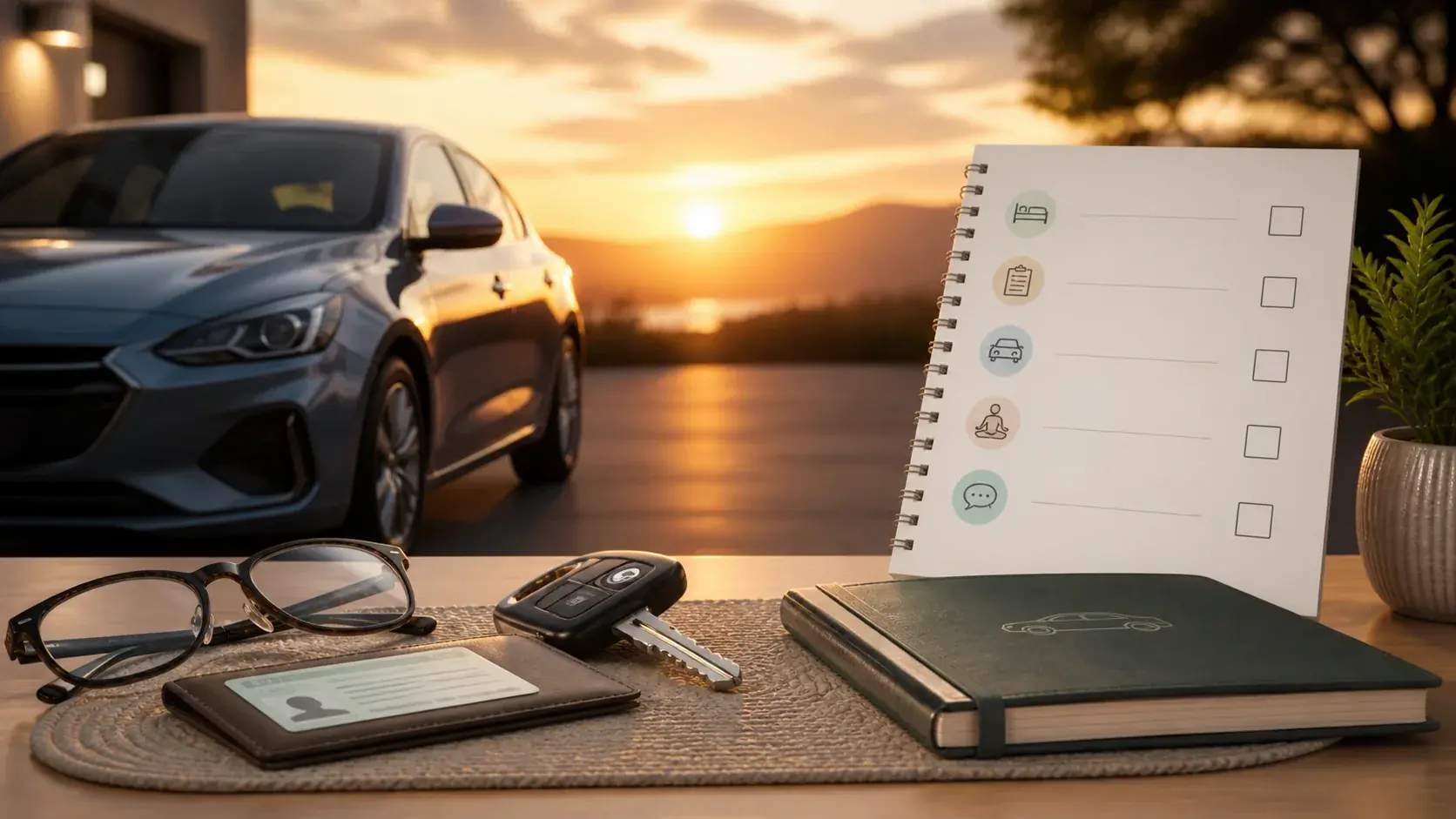
The day before a driving test can feel strangely busy. You may start wondering whether your logbook is complete, whether the car’s brake lights work or whether you will remember every observation at the right moment. The best response is not a late-night practice marathon. It is a calm, methodical check of the things you can control.
This NSW driving test checklist for the day before your appointment is designed to prevent avoidable surprises. Requirements and individual eligibility can change, so use current NSW Government driver licence information, the Road User Handbook and your booking confirmation as your authoritative references. Contact Service NSW before the test if anything is unclear.
1. Confirm the booking and organise your documents
Begin with the administrative details. Check the appointment date, time and testing location rather than relying on memory. Busy roads, unfamiliar car parks and similarly named streets can create unnecessary pressure, so confirm where you are going and discuss the travel plan with your supervising driver.
- Open your booking confirmation and check the date, appointment time and location.
- Review the booking instructions, including what you have been told to bring.
- Place your learner licence and relevant paperwork together in a secure, easy-to-reach location.
- Check that your licence details are current and that the licence will be valid at the time of the appointment.
- Confirm that your supervising driver is available and legally able to accompany you.
- Allow a sensible travel buffer for traffic, parking and an unhurried arrival.
- Save the location in your phone and discuss the route with your supervisor so navigation does not become a morning distraction.
2. Review your logbook carefully
If a learner logbook is relevant to your eligibility or appointment preparation, review it while there is still time to identify a genuine mistake. Whether you use an accepted digital system or paper records, the aim is to confirm that the record accurately reflects the driving you completed. Never invent trips, alter times to reach a target or ask a supervisor to approve practice that did not occur.
Logbook verification should be a careful check, not a quick glance at the total. Look for missing information, accidental duplication and entries that have not been completed correctly. Confirm that any displayed totals agree with the underlying entries. If you are unsure whether your record meets the requirements that apply to you, seek current advice from Service NSW rather than guessing.
- Check that completed drives have been recorded accurately.
- Look for blank fields, incomplete entries or obvious typing errors.
- Confirm that relevant supervisor details and approvals have been completed correctly.
- Make sure digital records are synchronised and accessible on the device you intend to take.
- Charge your phone if you rely on a digital logbook, and ensure you know your login details.
- Keep any relevant paper record flat, dry and together with your other documents.
- Resolve uncertainty through current NSW Government or Service NSW information before attending.
3. Give the test car a proper readiness check
A familiar car can help you feel settled, but familiarity does not replace a basic safety inspection. Conduct the check in daylight with your supervising driver. If either of you finds a fault that could affect safe or legal operation, arrange an appropriate repair or another suitable vehicle rather than hoping the problem will be overlooked.
- Confirm the vehicle’s registration status through an official NSW channel.
- Walk around the car and inspect the tyres for visible damage, low pressure or unusual wear.
- Check tyre pressures against the vehicle manufacturer’s information rather than relying on a guess.
- Test the headlights, indicators, brake lights and hazard lights with another person assisting.
- Check the windscreen and windows for cleanliness, damage or anything that affects visibility.
- Test the demisters, windscreen wipers, washers and horn.
- Make sure the brakes, steering and seatbelts operate normally, with no warning signs or obvious faults.
- Remove bottles, bags and other loose objects that could roll into the pedal area or cause a distraction.
- Adjust the driver’s seat, head restraint and mirrors, then confirm that you can comfortably reach and operate the controls.
- Ensure there is enough fuel or battery charge for the journey, possible waiting time and the appointment.
Clean glass can improve visibility, particularly around low-angle sunlight. While the car is safely parked, clean the inside and outside of the windscreen with a suitable automotive glass cleaner and clean microfibre cloth. Avoid leaving a hazy residue that becomes distracting when sunlight reaches the glass.
4. Prepare the driver, not just the car
Nerves are normal. They show that the test matters to you, but they do not mean you are unprepared. Your goal is not to eliminate every anxious thought; it is to prevent those thoughts from controlling your decisions. Finish preparation at a reasonable hour and avoid repeatedly imagining everything that could go wrong.
- Choose comfortable clothing and secure footwear that allow normal pedal control.
- Prepare water and a simple meal or snack for before the appointment.
- Set an alarm and a backup alarm, then put your phone on charge.
- Avoid staying up late to watch test videos or memorise supposed local test routes.
- Take a few minutes to breathe slowly and settle your attention.
- Remind yourself to drive safely and respond to the road you actually see rather than trying to predict the assessor.
- Agree with your supervisor that the journey to the centre will be calm, without last-minute criticism or rapid-fire questioning.
5. Keep any final drive short and purposeful
If you take a final drive, use it to settle into the vehicle rather than to learn new skills. Practise routine tasks such as setting up the seat and mirrors, moving away safely, responding to signs and signals, maintaining an appropriate following distance and selecting safe gaps. Ask your supervisor to provide concise feedback after the drive rather than narrating every action while you are driving.
- Choose familiar roads and ordinary traffic conditions appropriate to your experience.
- Complete your normal cockpit checks before moving away.
- Concentrate on observation, planning and smooth control rather than trying to appear perfect.
- Use feedback to identify one or two useful reminders, not a long list of last-minute changes.
- End the drive if fatigue, frustration or poor concentration begins to affect your decisions.
Do not chase a perfect final session. Traffic conditions vary, and a minor mistake during practice does not predict the test result. If you are tired or becoming frustrated, stop. Rest is likely to be more useful than another hour behind the wheel.
Final takeaway
A well-prepared test day starts with an orderly evening: confirm the booking, organise your licence and records, review your logbook honestly, inspect the car and make a realistic travel plan. Then step away from preparation and rest. SafeDrive Driving School encourages learners across Sydney to approach the test as a demonstration of everyday safe driving, not as a performance requiring perfection. Control what you can, follow current NSW Government guidance and arrive ready to make patient, observant decisions.
Official sources
- Road User Handbook — NSW Government
- NSW Driver Licences & Learner Driver Guidelines — NSW Government