
10 Common Driving Test Mistakes Sydney Learners Should Avoid
Preparing for a NSW driving test? Learn how to avoid common mistakes involving observation, speed management, hazard perception, road positioning and decision-making.
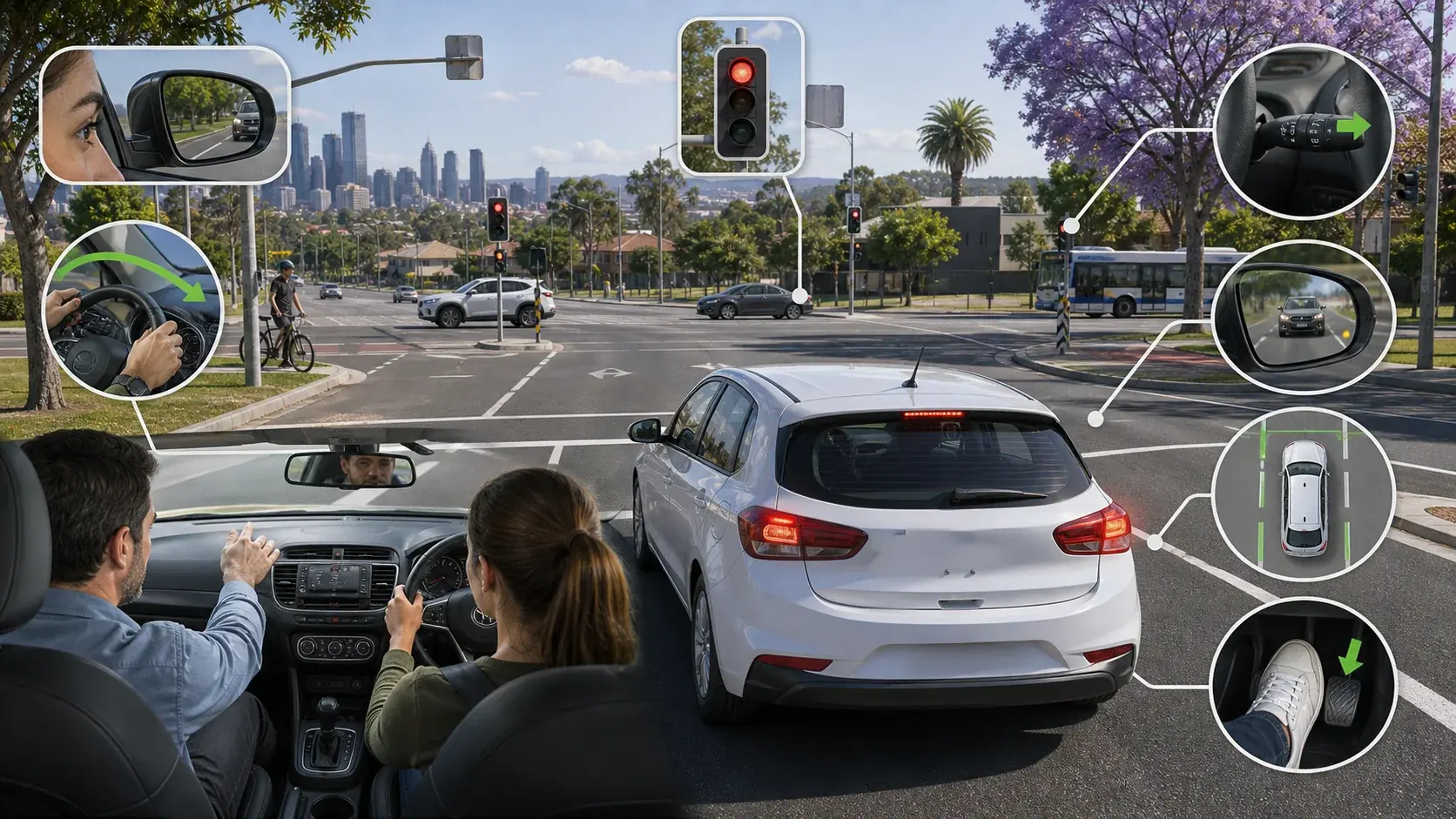
A driving test can make even a well-prepared learner feel nervous. The aim is not to impress the testing officer with perfect driving or memorise a particular route. It is to demonstrate that you can drive safely, legally and with appropriate control while responding to changing traffic conditions.
The most effective way to avoid common driving test mistakes in Sydney is to develop routines that work on unfamiliar roads as well as familiar ones. Whether you are practising in Blacktown, elsewhere in Western Sydney or another part of New South Wales, use the current NSW Road User Handbook and NSW Government learner driver information as your authoritative references. Then focus your practical training on the following ten areas.
Observation and hazard perception mistakes
1. Looking without properly observing
Moving your head or glancing towards a mirror is not enough if you do not process what you see. Effective observation means noticing vehicles, pedestrians, cyclists, signs, signals and developing hazards. Keep your eyes moving and build a complete picture of the traffic environment rather than staring at the vehicle directly ahead.
- Check mirrors regularly and before changing speed, position or direction.
- Scan well ahead instead of concentrating only on the road in front of the bonnet.
- Look into side streets, driveways and across intersections for developing hazards.
- Recheck the situation when a manoeuvre or decision takes longer than expected.
2. Missing necessary blind-spot checks
Mirrors cannot show every area around a vehicle. Before moving away from the kerb or making a lateral movement, complete the observation checks appropriate to the situation, including a direct check where needed. Time the check so the information remains useful, and keep it brief enough that you do not look away from the road ahead for too long.
3. Responding too late to hazards
Hazard perception involves recognising a possible problem early and responding before urgent action is required. A pedestrian near a crossing, a vehicle edging out of a driveway, brake lights appearing ahead or a bus preparing to enter traffic may all require attention. Ease off the accelerator early, create space and prepare to stop if necessary. Defensive driving should be calm and planned rather than sudden or hesitant.
Speed, spacing and vehicle control mistakes
4. Managing speed poorly
Speed management involves obeying the posted limit and selecting a speed suitable for the conditions. Visibility, traffic, weather, road surfaces and vulnerable road users can all affect what is safe. Watch for signs and monitor the speedometer without fixating on it. When the road environment becomes busy or unpredictable, reduce speed smoothly and early.
- Do not accelerate automatically simply because the road appears to open up.
- Notice speed-limit signs and changes in the surrounding road environment.
- Use smooth accelerator control, particularly when travelling downhill.
- Select a speed that gives you time to identify and respond to hazards.
5. Following another vehicle too closely
Following too closely limits your view and reduces the time available to react. Maintain a safe gap and increase your space when visibility, weather or road conditions deteriorate. If the vehicle ahead slows, ease off early rather than continuing to close the gap. Good spacing demonstrates forward planning and gives you more options if conditions change.
6. Using harsh or uncertain controls
Abrupt braking, rushed steering and jerky acceleration can indicate that a learner is noticing hazards too late. Practise looking further ahead so you can make gradual adjustments. During low-speed manoeuvres, use accurate steering and controlled movement rather than rushing. In normal driving, keep your direction and speed stable unless the conditions require a change.
Positioning and decision-making mistakes
7. Choosing an unsafe road position
Good positioning creates safety margins and makes your actions predictable. Stay appropriately within your lane, allow clearance from parked vehicles and avoid drifting while turning or checking mirrors. On narrow streets, manage the available space carefully and be prepared to slow for oncoming traffic. Instead of fixating on a kerb or obstacle, look towards the safe path you want the vehicle to follow.
8. Signalling too late or leaving an indicator on
Indicators tell other road users what you intend to do, but they do not give you priority. Signal with enough notice to be useful, continue observing and move only when it is safe and lawful. Once the movement is complete, confirm that the indicator has cancelled. An indicator left operating may mislead other road users.
9. Rushing decisions at intersections
Intersections require coordinated observation, speed control and judgement. Approach at a speed that allows you to identify the controls, comply with signs and signals, and give way when required. Check for pedestrians and cyclists as well as motor vehicles. Before proceeding, make sure there is enough space and time rather than assuming another road user will slow down for you.
10. Allowing nerves to control the drive
Nervous learners may rush, become excessively hesitant or stop processing what is happening around them. If you make a minor error, do not assume the test is over. Refocus on the traffic situation and choose the next safe action. Listen carefully to directions, seek clarification if you did not hear an instruction and never make an unsafe movement simply to follow a direction.
- Arrive with enough time to avoid feeling rushed.
- Adjust the seat, mirrors and controls before moving.
- Take calm breaths and focus on one developing situation at a time.
- Practise in varied traffic and road conditions instead of relying on one familiar route.
- Ask your driving instructor for an honest assessment of your readiness.
How to prepare before test day
Preparation should cover both the driver and the vehicle. Before test day, make sure visibility is clear and the vehicle is suitable for normal road use. Check the tyres, windows, mirrors, lights and other essential equipment. Complete these checks early enough to address a problem without adding last-minute stress.
Your final practice sessions should concentrate on consistency rather than learning tricks. Ask your supervising driver or instructor to limit prompts and observe whether you identify hazards, manage speed and make decisions independently. Continue checking the current NSW Government resources for authoritative information about road rules, licensing and learner driver obligations instead of relying on social media posts or outdated summaries.
Final takeaway
No instructor can guarantee a first-time pass, but thorough preparation gives you a better opportunity to demonstrate safe driving. Build dependable routines around observation, blind-spot checks, hazard perception, speed management, safe spacing, smooth control and patient decisions. These are not merely test techniques; they are habits that support safer independent driving.
A SafeDrive Driving School instructor can help identify gaps in your driving and practise them in real traffic around Blacktown and Western Sydney. Aim to reach the point where safe decisions happen without constant prompting. When observation, control and good judgement have become normal parts of every drive, you will be better prepared for both the assessment and the responsibilities that follow.
Official sources
- Road User Handbook — NSW Government
- NSW Driver Licences & Learner Driver Guidelines — NSW Government