
Hill Starts and Stopping on Inclines: A Sydney Learner's Guide to Clutch Control and Confidence
Master hill starts and stopping on inclines with calm, step-by-step clutch control and handbrake technique for Sydney learner drivers, plus practical tips for the NSW driving test.
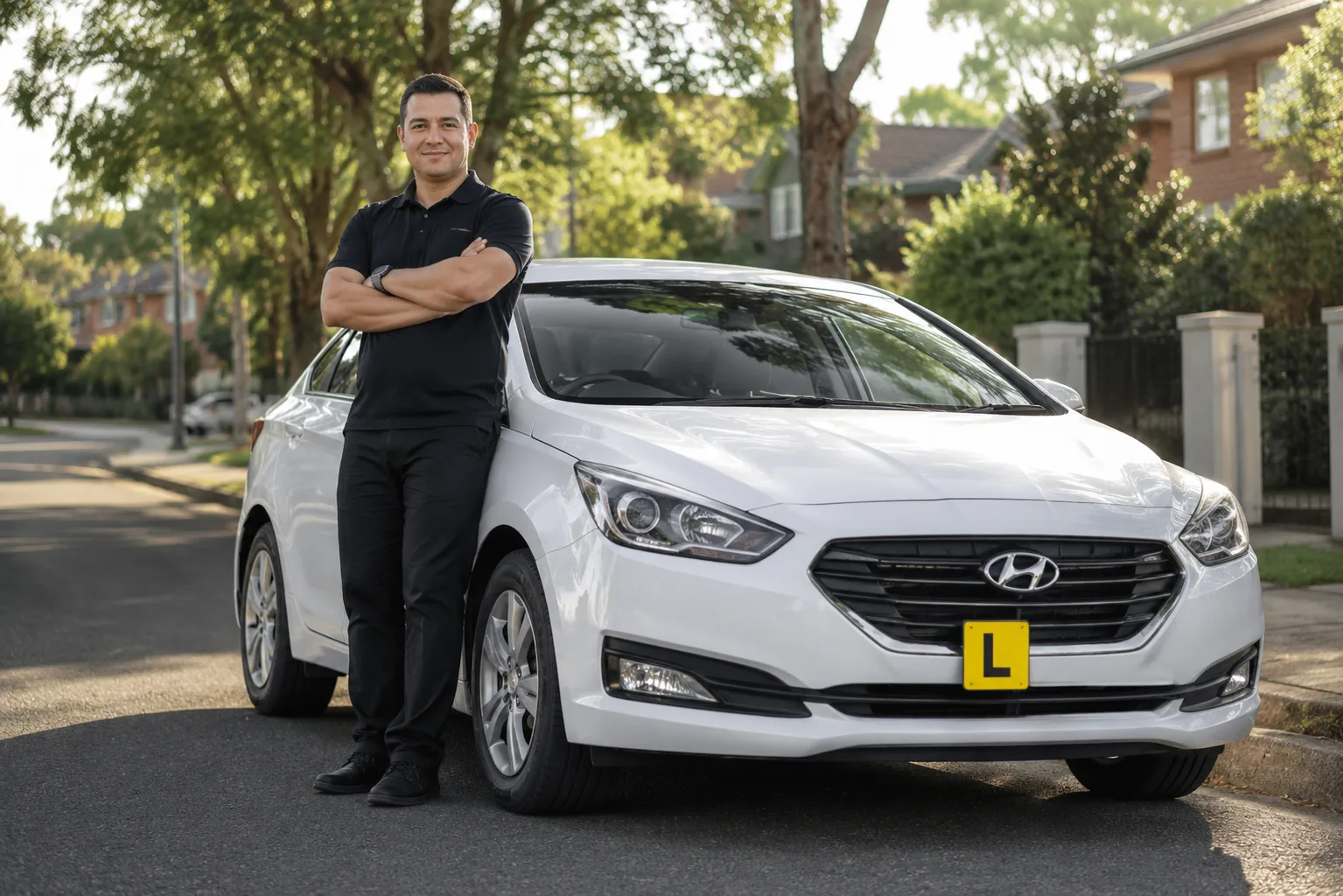
Sydney's hilly suburbs, from the steep streets around Blacktown and Western Sydney to the rollercoaster roads near the coast, are brilliant places to build real clutch control. A hill start is simply the skill of moving off smoothly without rolling backwards. Once you understand what the car is doing, it stops feeling like a test and starts feeling like a normal part of driving.
Why Hill Starts Feel Hard (and Why They Don't Have To)
On flat ground, gravity is not fighting you. On an incline, the car wants to roll downhill the moment you release the brake. Your job is to balance three things: the clutch biting point, a little accelerator, and the handbrake or foot brake. When those three work together, the car holds still and then moves forward smoothly.
- The clutch biting point is the moment the engine starts to connect with the wheels. You will feel the bonnet lift slightly and hear the engine note drop.
- The handbrake gives you a third hand. It holds the car while your feet set up the clutch and accelerator.
- A small amount of accelerator prevents stalling. You do not need to rev hard.
- Patience beats speed. Rushing the clutch is the main cause of rolling back or stalling.
The Handbrake Hill Start: Step by Step
This is the method most driving instructors in Sydney teach first because it is safe, repeatable, and easy to demonstrate in a test. Practise it on a quiet incline with no traffic behind you.
- Stop with the handbrake on and the car in neutral or first gear, depending on your instructor's guidance.
- Press the clutch all the way down and select first gear.
- Bring the clutch up slowly until you feel the biting point. Hold it there.
- Add a small amount of accelerator and listen for the engine note to change.
- Release the handbrake smoothly while keeping the clutch steady.
- Once the car is moving forward, gently release the clutch the rest of the way and accelerate normally.
Stopping on an Incline Without Rolling Back
Stopping smoothly on a hill is the other half of the skill. The goal is to come to a controlled stop and then hold the car still without riding the clutch or holding the foot brake for a long time.
- Check your mirrors early and brake gently. Gravity will help you slow down, so you need less pedal pressure than on flat ground.
- As you stop, keep the clutch pressed in and apply the handbrake before you release the foot brake.
- If you are waiting for more than a few seconds, select neutral and keep your foot on the brake or handbrake on.
- When it is time to move, repeat the handbrake hill start sequence from the beginning.
What the NSW Driving Test Expects
The NSW driving test assesses whether you can control the car safely in a range of conditions, including hills. Examiners are looking for smooth, legal, and confident control. They are not looking for perfection, but they are looking for safety.
- You must not roll backwards into the car behind you. Even a small roll can be marked as a fail if it affects safety.
- You must signal and check mirrors before moving off, just as you would on flat ground.
- You must maintain control of the car at all times. Stalling once is not an automatic fail, but repeated stalling or panic can be.
- You should use the handbrake when stationary on a hill if you are waiting, as it shows good vehicle control.
The Road User Handbook and Transport for NSW learner resources are the best places to confirm the exact requirements. Your instructor will also know the local test routes and the types of hills you are likely to face.
Building Confidence on Sydney's Hills
Confidence comes from repetition in low-pressure situations. Start on a gentle slope in a quiet street, then gradually move to steeper hills with more traffic. If you feel nervous, it is fine to practise the same hill ten times. That is how the skill becomes automatic.
- Practise at different times of day, but start when roads are quiet.
- Use a quiet industrial area or a residential street with a clear view.
- Ask your supervising driver to watch the rear and tell you if you roll back, so you can feel what is happening.
- Once you are smooth, add a turn at the top of the hill to practise steering and clutch control together.
A small blind spot mirror can help you keep an eye on the kerb and traffic behind you when you are focused on the clutch. It is a simple addition that makes hill starts and lane changes less stressful.
Common Mistakes and How to Fix Them
- Rolling back: You released the handbrake before the clutch was at the biting point. Hold the biting point longer.
- Stalling: You lifted the clutch too quickly or did not add enough accelerator. Add a little more gas and release the clutch more slowly.
- Jerking forward: You released the clutch too fast after the car started moving. Keep it smooth and gradual.
- Panicking in traffic: Take a breath, set the handbrake, and start again. Everyone stalls sometimes. The key is to stay calm and in control.
Final Takeaway
Hill starts are a skill, not a talent. With the handbrake method, a steady clutch, and a little patience, you can stop and start on any Sydney incline without stress. Practise on quiet hills first, build up gradually, and remember that smooth control is always safer than speed. If you are preparing for the NSW driving test, ask your instructor to include hill starts in your lessons so you can rehearse them until they feel completely normal.
Official sources
- Road User Handbook — NSW Government
- NSW Driver Licences & Learner Driver Guidelines — NSW Government