
Mastering the Shoulder Check: Essential for NSW Learner Drivers
Effective shoulder checks are crucial for safe driving, especially for learner drivers in NSW. Learn how to master this essential technique to eliminate blind spots and drive with confidence.
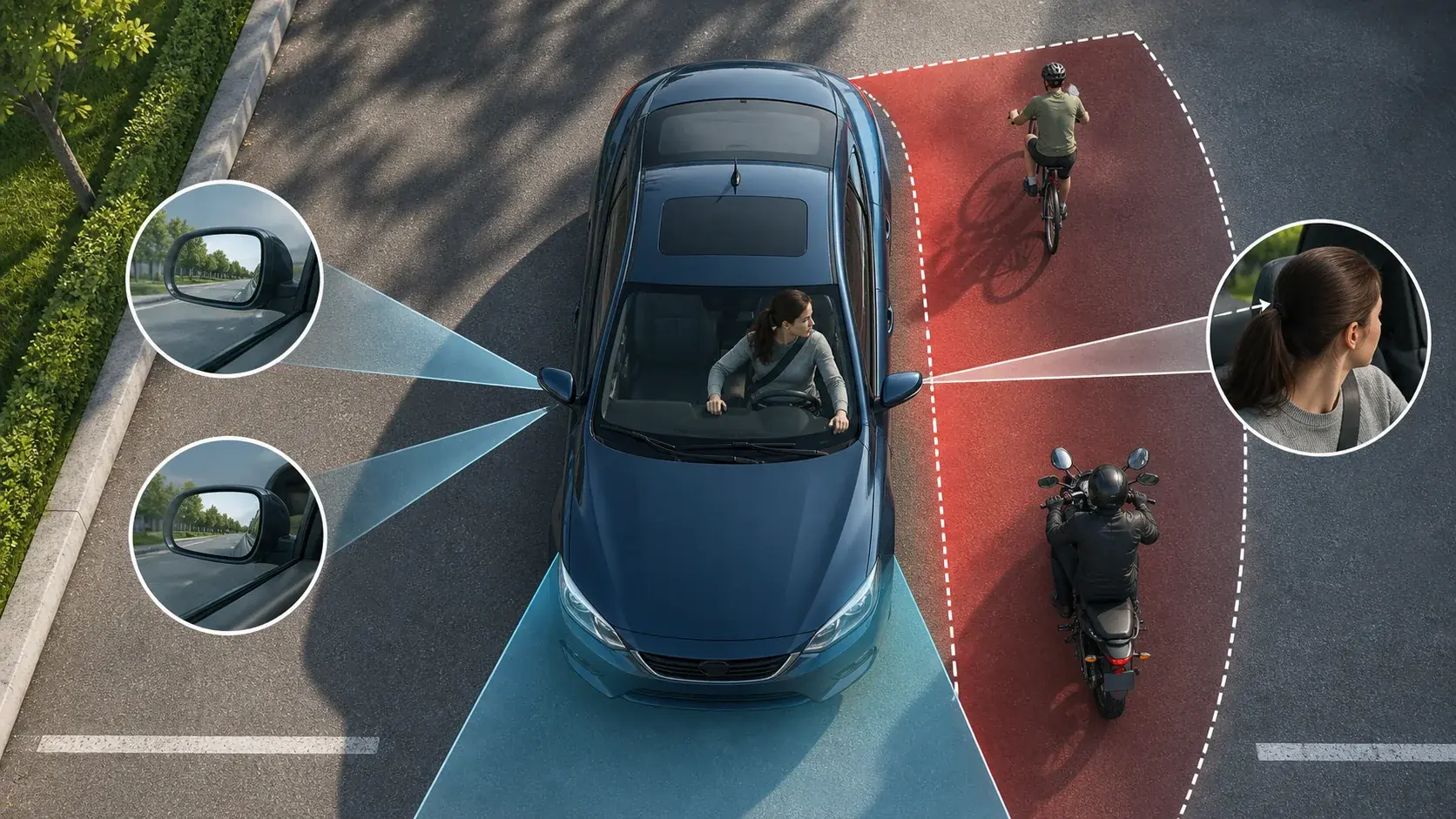
As a learner driver in NSW, developing safe driving habits from the start is paramount. One of the most critical skills you'll need to master is the shoulder check, often referred to as checking your blind spot. This quick, deliberate head turn ensures you see what your mirrors miss, preventing potential collisions when changing lanes, turning, or moving off the kerb. At SafeDrive Driving School, we emphasise that a thorough shoulder check is not just a recommendation; it's a fundamental safety requirement for every driver.
Understanding Blind Spots and Why They Matter
Every vehicle has blind spots – areas around the car that are not visible in your rear-view or side mirrors. These areas can hide other vehicles, motorcycles, cyclists, or even pedestrians, making them incredibly dangerous if not checked properly. Relying solely on your mirrors can lead to serious accidents, particularly on busy Sydney roads.
- Your side mirrors, even when correctly adjusted, cannot show you everything directly beside and slightly behind your vehicle.
- The size and shape of your vehicle, as well as the design of other vehicles, influence the extent of blind spots.
- Motorcyclists and cyclists are particularly vulnerable as they can easily be hidden in a vehicle's blind spot.
The Step-by-Step Guide to an Effective Shoulder Check
Practising the shoulder check until it becomes second nature is vital. Here’s how to execute it correctly and safely:
- Scan Your Mirrors: Before any manoeuvre (changing lanes, turning, merging), always check your rear-view mirror first, then your side mirrors. This gives you an initial assessment of traffic around you.
- Signal Your Intent: Activate your indicator well in advance to signal your intentions to other road users. This is a legal requirement and a crucial safety step.
- Quick Head Turn: This is the shoulder check. Turn your head quickly to glance over the shoulder in the direction you intend to move. For example, if changing to the right lane, look over your right shoulder. This glance should be brief – just long enough to confirm the blind spot is clear.
- Keep Your Eyes Moving: While performing the shoulder check, your peripheral vision should still be aware of what's happening in front of you. Never take your eyes off the road ahead for too long.
- Execute the Manoeuvre: If the blind spot is clear and it's safe to proceed, smoothly and gradually execute your manoeuvre. Avoid sudden movements.
- Cancel Signal: Once the manoeuvre is complete, remember to cancel your indicator.
Practising in Different Scenarios
Consistent practise in various driving situations will solidify your shoulder check technique. Here are key scenarios where this skill is indispensable:
- Changing Lanes: This is the most common scenario. Always perform a mirror-signal-shoulder check-manoeuvre sequence.
- Merging onto a Motorway or Freeway: High speeds mean blind spots are even more critical. A thorough shoulder check is essential before merging.
- Turning at Intersections: Before turning, especially left turns where cyclists might be on your inside, a quick shoulder check can prevent collisions.
- Moving Off the Kerb: Before pulling away from the kerb, check your mirrors and perform a shoulder check to ensure no pedestrians, cyclists, or vehicles are approaching from behind or alongside.
- Parking Manoeuvres: While not always a primary shoulder check scenario, being aware of your surroundings and potential blind spots is crucial when reversing or parallel parking.
Supervising drivers play a vital role in reinforcing this habit. Encourage your learner to verbalise their checks ('mirror, signal, shoulder check, clear') to build a strong routine.
Final Takeaway
Mastering the shoulder check is a non-negotiable skill for every learner driver in NSW. It's a small movement that makes a huge difference in road safety, helping you to identify and react to potential hazards that your mirrors simply cannot show. Consistent practise, combined with proper mirror adjustment and signalling, will build your confidence and make you a safer, more aware driver on the roads of Blacktown, Western Sydney, and beyond. Remember, safe driving is about seeing the whole picture, not just parts of it.
Official sources
- Road User Handbook — NSW Government
- NSW Driver Licences & Learner Driver Guidelines — NSW Government