
Making reverse parking practice about observation first
Reverse parking often attracts attention because the final position is easy to judge.
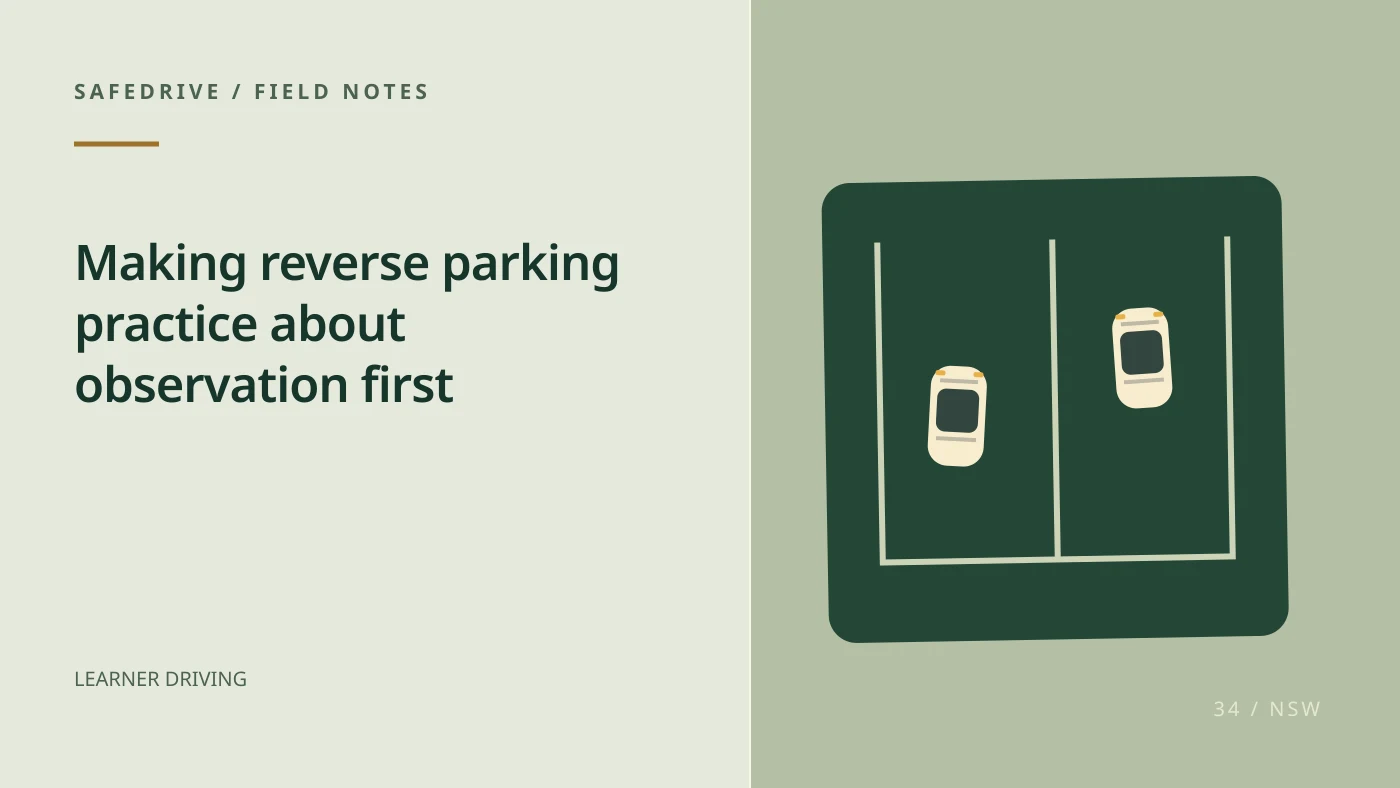
Reverse parking often attracts attention because the final position is easy to judge. The less visible part is the observation that keeps people and vehicles safe while you manoeuvre. Build the practice around that awareness from the beginning.
Understand the situation
Choose a suitable lawful practice area with your instructor. Keep the vehicle controlled at low speed and check the area throughout the manoeuvre. Camera images and parking sensors can help, but their limitations must be understood. Stop if the situation changes or your view is uncertain.
Before you practise
- Check the area before selecting reverse
- Maintain observation as the vehicle moves
- Pause when a person or vehicle enters the space
A focused practice session
Ask your instructor to separate the exercise into observation, control and final position. Review which part needed the most help. Repeat in a different suitable space only after you can explain what you checked and why. A neat position achieved through constant prompting is still a learning stage.
A situation to discuss
While reversing into a permitted space, you see someone walking towards the area behind the car. Stop and reassess instead of continuing because the camera display still looks clear. The useful success measure is that you noticed the change and responded. Finish positioning only when it is safe. A parking exercise can therefore show progress even when the first attempt is interrupted and the final position needs another correction.
Sources and further reading
- Parking safely in NSW — NSW Government