
Mastering the 3-Second Rule: Following Distance on Sydney Roads
Learn the vital 3-second rule for safe following distances on Sydney roads. This guide for NSW learner and supervising drivers covers how to apply it, why it's crucial, and tips for various conditions.
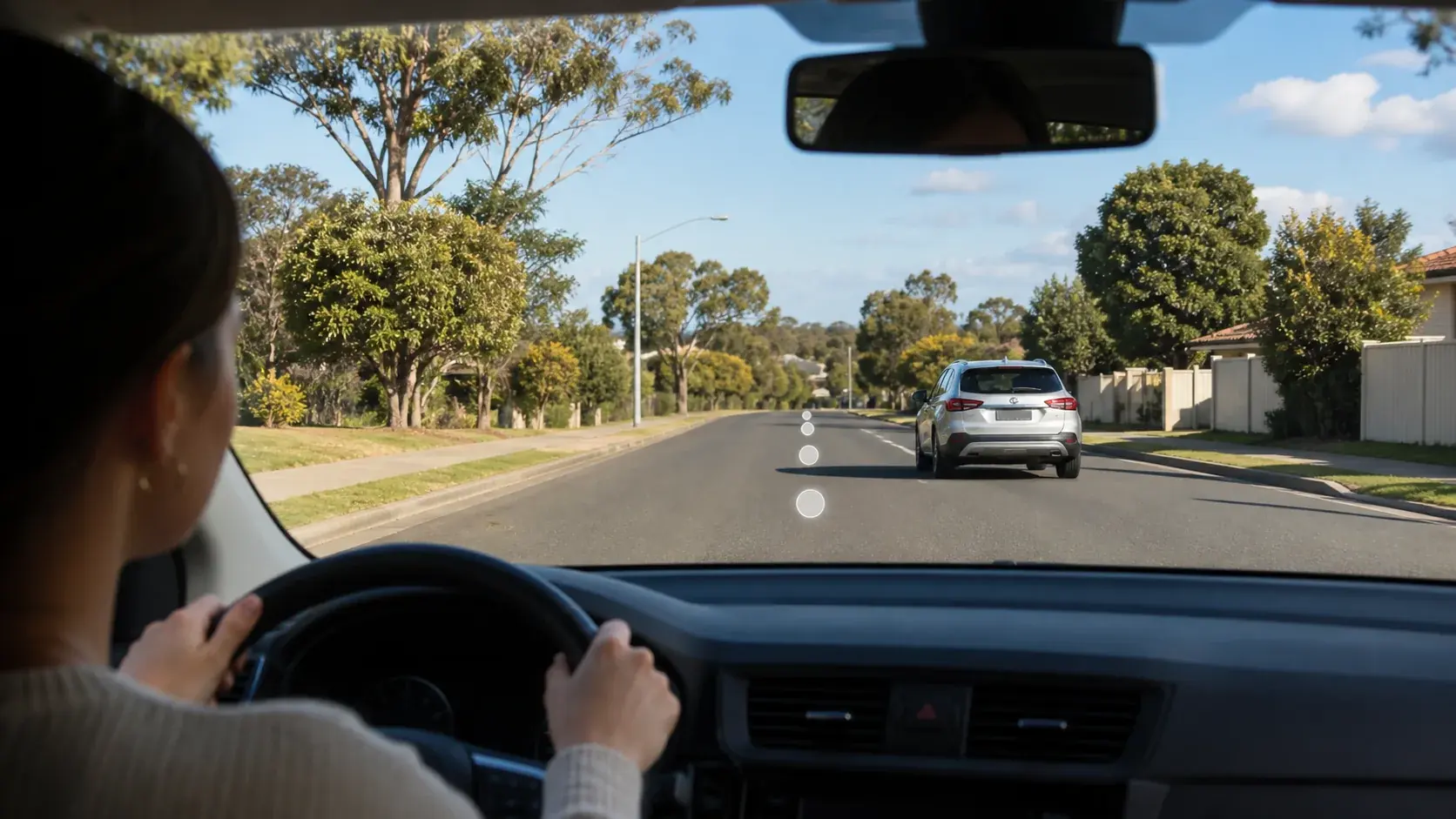
As a learner driver in Sydney, understanding and consistently applying the 3-second rule for following distance is one of the most fundamental safety skills you'll develop. It's not just a guideline; it's a critical habit that provides you with the necessary time and space to react safely to unexpected events on the road. This article will break down the 3-second rule, explain its importance, and offer practical advice for mastering it on our busy NSW roads.
What is the 3-Second Rule and How Do You Use It?
The 3-second rule is a simple yet effective way to ensure you maintain a safe following distance from the vehicle in front of you. It's designed to give you enough time to perceive a hazard, decide on a course of action, and execute that action (like braking) without colliding with the vehicle ahead. This rule applies to all road users, but it's especially important for learner drivers to practise diligently.
Applying the Rule Step-by-Step:
- Choose a fixed point: As the vehicle in front of you passes a fixed point on the side of the road (like a sign, a tree, or a power pole), start counting 'one thousand and one, one thousand and two, one thousand and three'.
- Check your position: If your front bumper reaches that same fixed point before you finish counting 'one thousand and three', you are following too closely. You need to increase your distance.
- Adjust and repeat: Ease off the accelerator to create more space, then pick a new fixed point and repeat the count until you can comfortably finish 'one thousand and three' before reaching it. This is your safe following distance.
Why is the 3-Second Rule So Important?
Maintaining a safe following distance is crucial for several reasons, directly impacting your safety and the safety of others on the road. It's a key component of defensive driving, which all learner drivers should strive to master (NSW Government, Road User Handbook).
- Reaction Time: The average driver's reaction time is about 0.75 to 1.5 seconds. The 3-second rule accounts for this, plus the time it takes for your vehicle to actually respond to your braking.
- Braking Distance: Your vehicle doesn't stop instantly. Braking distance varies significantly with speed, road conditions (wet roads require much more distance), and the condition of your tyres and brakes. More space means more stopping power.
- Visibility: A greater following distance allows you to see further down the road, giving you an earlier warning of potential hazards like sudden stops, debris, or changes in traffic flow.
- Space gives you time to brake progressively and reassess. Do not treat steering around a stopped vehicle as a standard escape manoeuvre; keep control, stay in your lane where possible and avoid creating a new collision.
- Avoiding Tailgating: Tailgating is dangerous and can lead to road rage from other drivers. It also significantly increases your risk of a rear-end collision, which is a common type of accident.
Adjusting for Conditions: When 3 Seconds Isn't Enough
In good conditions, use at least 3 seconds. In poor conditions, allow 4 or more seconds; at higher speeds, allow at least 5 seconds. Increase the gap further whenever visibility, traffic, weather or the road surface makes the situation more demanding.
- Wet or Slippery Roads: Rain, oil, or loose gravel drastically reduce tyre grip. Double your following distance in these conditions.
- Poor Visibility: Fog, heavy rain, or glare from the sun reduce your ability to see ahead. Increase your distance to compensate.
- Driving at Night: Reduced visibility at night means you need more time to react to hazards that might be harder to spot.
- Heavy Vehicles: Trucks and buses take much longer to stop than passenger cars. Give them extra space, especially if you are behind one.
- Towing a Trailer or Caravan: Your combined vehicle and trailer will have a significantly longer braking distance. Allow ample room.
- Following motorcycles: keep a generous, visible gap and allow for changing speed, road conditions and rider stability. Do not rely on a broad claim that motorcycles always stop faster than cars.
- Unfamiliar Roads or Heavy Traffic: When you're less familiar with the road or navigating dense traffic, an increased following distance provides a buffer against the unexpected.
- When you are tired or distracted: If your concentration isn't 100%, compensate by increasing your following distance.
Supervising drivers, it's your role to constantly remind and guide your learner to maintain appropriate following distances. Talk through scenarios and encourage them to articulate why they are choosing a particular distance. This active coaching is invaluable for developing good habits (NSW Government, NSW Driver Licences & Learner Driver Guidelines).
Mastering the 3-second rule, and knowing when to extend it, is a cornerstone of safe driving. It gives you control, reduces stress, and significantly lowers your risk of being involved in a collision. At SafeDrive Driving School, we emphasise this skill in every lesson because it's fundamental to becoming a confident and responsible driver on Sydney's roads. Practise it consistently, and it will serve you well throughout your driving life.
Official sources
- Road User Handbook — NSW Government
- NSW Driver Licences & Learner Driver Guidelines — NSW Government