
Planning observation before an ordinary left turn
A left turn can feel simple enough to perform automatically.
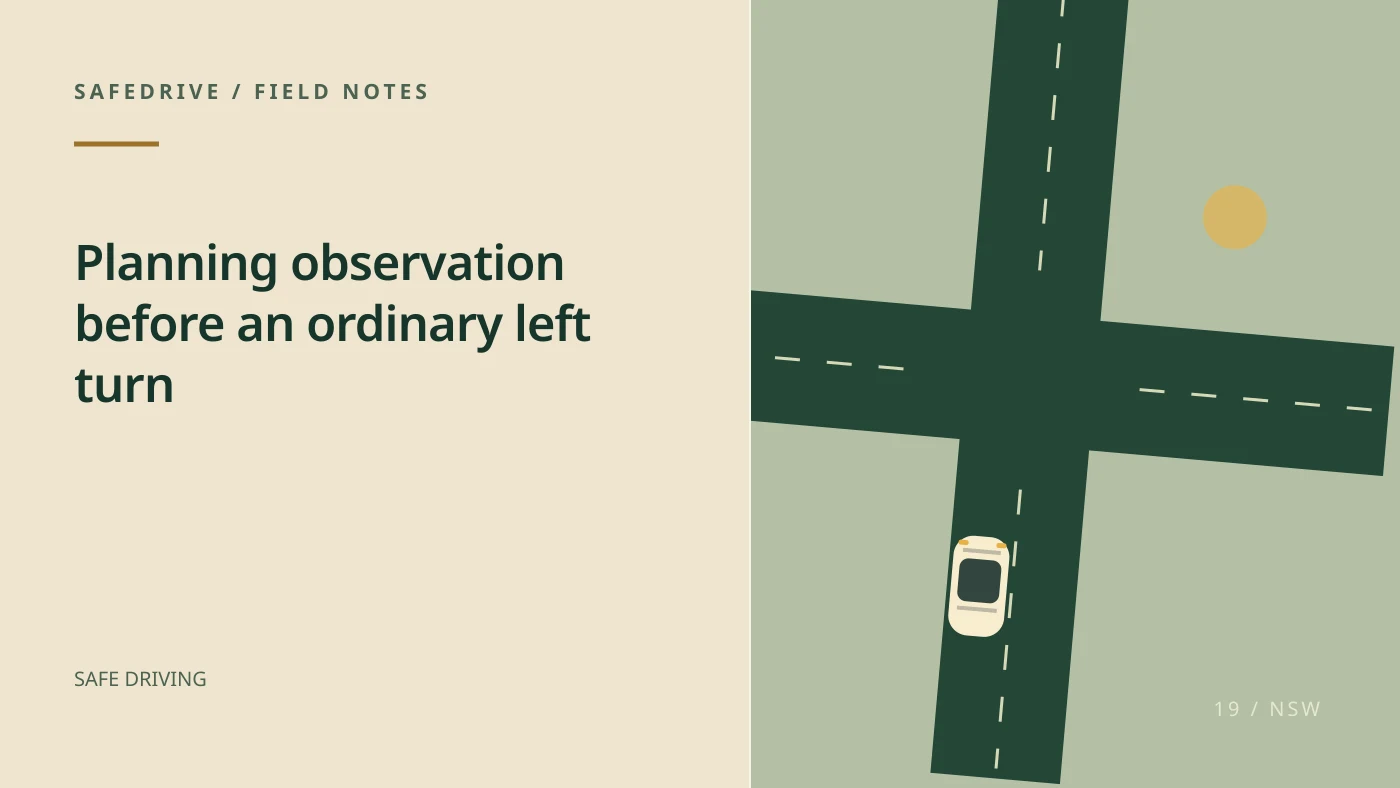
A left turn can feel simple enough to perform automatically. That is why it is useful to slow the preparation down during lessons: read the signs, identify other road users and choose a safe position before steering.
Understand the situation
The exact priority depends on the signs, signals, crossings and road layout. Use the official NSW turning guidance to understand the rules, then practise applying them with your instructor. Looking once is not enough when pedestrians, bicycles or traffic can move into the situation.
Before you practise
- Read the control signs and lane markings early
- Look for people crossing or approaching the road
- Choose a speed that leaves time to reassess
A focused practice session
Ask your instructor to compare two left turns with different layouts. While parked afterwards, explain what changed your decision at each one. The goal is to recognise the layout and people involved, rather than perform a fixed sequence without understanding it.
A situation to discuss
You approach a left turn where pedestrians are crossing the receiving road. A gap in vehicle traffic does not remove the pedestrian decision. NSW turning guidance requires giving way to pedestrians crossing the road you are turning into. Slow the task down with your instructor and identify both groups of road users. The lesson should connect the legal priority with the actual people and space at this particular turn.
Sources and further reading
- Indicating and turning — NSW Government