
Safe Driving Habits for Sydney Roads: Everyday Awareness
Build safer everyday driving habits with practical guidance on observation, hazard perception, defensive driving and speed management for Sydney and NSW roads.
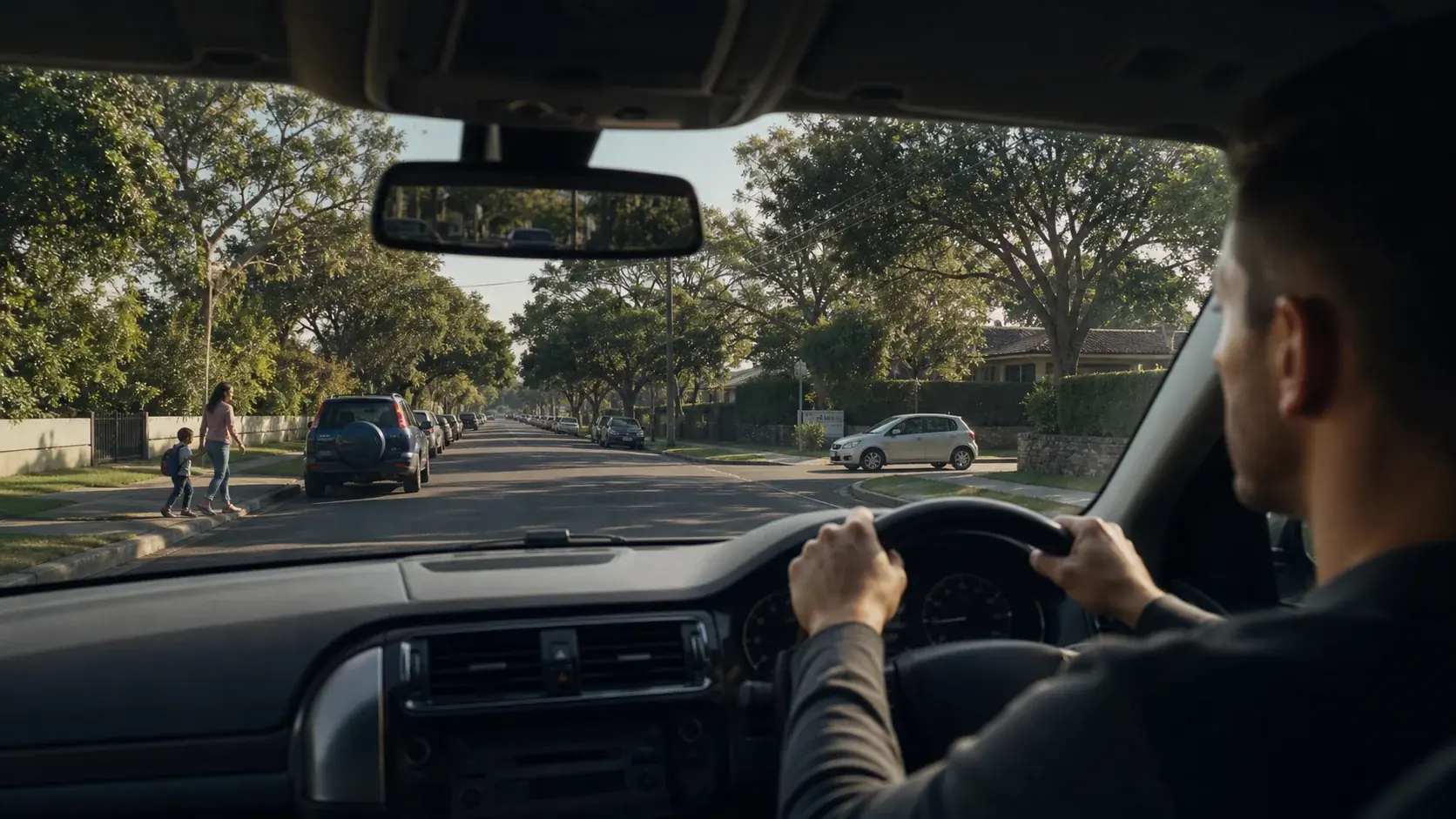
Familiar trips can be among the easiest places to lose concentration. When you know every turn, traffic light and parking entrance, it is tempting to operate on autopilot. However, the road is never exactly the same: a pedestrian may approach a crossing, a delivery vehicle may block your view, or traffic may stop more sharply than expected. Strong everyday awareness means noticing these changes early enough to respond calmly.
Safe driving habits on Sydney roads are not based on one special technique. They come from repeatable decisions involving observation, hazard perception, space, speed and vehicle control. The NSW Government’s Road User Handbook is the authoritative reference for road rules and safe road-use guidance, while the NSW driver licence information should be checked for current licensing and learner driver requirements.
Build an active observation routine
Looking towards the road is not the same as actively observing it. A driver may face forward while concentrating only on the vehicle immediately ahead. Effective observation involves moving your attention between the distance, the developing situation near your vehicle, the road edges and your mirrors. The goal is to maintain a useful picture of the whole driving environment rather than staring at one point.
Look for clues before they become urgent. Brake lights several vehicles ahead may warn of slowing traffic. A person partly hidden by parked cars may be preparing to enter the road. A vehicle waiting at a side street may have limited visibility. These clues do not guarantee that a hazard will develop, but recognising them gives you more time to prepare.
- Scan beyond the vehicle directly ahead to detect traffic changes earlier.
- Include mirrors in your observation, especially before changing speed, direction or road position.
- Watch for pedestrians, cyclists, motorcyclists and vehicles hidden by obstructions.
- Rebuild your road picture after turning, changing lanes or passing a large vehicle.
- Keep your vision and attention directed towards the driving task.
Use a simple hazard perception process
Hazard perception is not about predicting the future perfectly. It involves recognising clues, considering what could reasonably happen and creating enough time and space to manage the situation. A practical sequence is: see the clue, consider the possible conflict, identify your safe options and adjust early when necessary.
For example, when approaching a shopping area, clues may include open car doors, reversing lights, people carrying bags and restricted views near driveways. A defensive response could include easing off the accelerator, increasing observation and preparing to stop if required. The important part is preparing progressively rather than relying on a last-second reaction.
- Notice movement, restricted visibility, brake lights and unusual road position.
- Consider whether someone could enter your path or whether traffic may stop.
- Create options by adjusting speed, preserving space and avoiding unnecessary side-by-side travel.
- Continue observing because a developing situation can quickly change.
- Choose a smooth, lawful response instead of depending on sudden steering or braking.
Drive defensively without becoming hesitant
Defensive driving means allowing for ordinary mistakes while remaining predictable yourself. It does not mean stopping whenever another road user might do something unexpected. Excessive hesitation can confuse others. A defensive driver observes carefully, communicates clearly, follows the road rules and keeps enough space to respond progressively.
Space is particularly valuable in dense Sydney traffic. Following too closely limits your view and reduces your options if traffic slows. A suitable following gap can help you see beyond the vehicle ahead and provide more time to respond. More space may be needed when visibility, weather, traffic or the road surface makes driving more demanding.
- Avoid remaining where another driver may have difficulty seeing your vehicle.
- Signal clearly and allow other road users time to understand your intention.
- Do not assume a signal, vehicle position or eye contact guarantees someone’s next action.
- Keep an escape option where practical instead of becoming boxed in by traffic.
- Let impatient behaviour pass without competing for road space.
- If you miss a turn, continue safely and find another route rather than making a sudden manoeuvre.
Use speed management to create thinking time
Speed management begins with obeying the applicable speed limit, but drivers must also pay attention to the conditions. Speed affects the time available to observe, decide and act. When the view is restricted or the situation becomes complex, reducing speed early can provide more thinking time and support smoother vehicle control.
Look for environments that require extra caution, including congested shopping streets, bends with limited sight distance, busy driveways, wet roads, roadworks, glare and areas with pedestrian activity. Reassess your speed whenever the road environment changes, and avoid simply matching surrounding traffic without checking your own speed.
- Check your speed regularly without staring at the speedometer.
- Ease off early when approaching a queue, restricted view or complex interaction.
- Enter bends at a speed that allows you to respond to what becomes visible.
- Allow more space when the road is wet or visibility is reduced.
- After leaving a faster road, consciously reassess your speed.
- Follow current signs and consult the NSW Road User Handbook for official guidance.
Protect visibility before moving off
Road awareness depends on clear vision. Before driving, remove mist, dirt and obstructions from the windscreen and windows. Set the mirrors and organise navigation while safely parked. Make sure loose items do not obstruct your view or interfere with the controls. If poor visibility becomes too difficult to manage, slow appropriately and stop somewhere safe if you cannot continue safely.
Suitable sunglasses may help reduce daytime glare, but they should provide clear, undistorted vision and should not be used when conditions are too dark. They are an aid rather than a substitute for adjusting speed, cleaning the windscreen or stopping when visibility is inadequate.
Automotive glass cleaner and a clean, lint-free cloth can help remove dirt and internal film. Clean the glass while parked and follow the product instructions to avoid leaving residue or causing damage.
Practise awareness deliberately
Learners and supervising drivers can make each trip more useful by selecting one awareness goal. One drive might focus on looking beyond the nearest vehicle. Another could involve identifying restricted sight lines or adjusting speed smoothly before potential hazards. After the drive, discuss one situation that was handled well and one that could be approached differently next time.
Supervisors should keep feedback calm and specific. Instead of saying “pay more attention”, identify the missed clue and a practical alternative. For example: “The parked four-wheel drive blocked the view near the crossing, so easing off earlier would have provided more time.” Specific feedback is easier for a learner to understand and practise.
Final takeaway
Safe driving habits for Sydney roads are built through quiet, consistent decisions: observe actively, recognise hazard clues, preserve space, manage speed and remain predictable. Practise these habits even on familiar routes. For authoritative information about NSW road rules or learner requirements, refer to the current NSW Government Road User Handbook and driver licence guidance.
Official sources
- Road User Handbook — NSW Government
- NSW Driver Licences & Learner Driver Guidelines — NSW Government