
Navigating NSW School Zones: A Guide for Learner and Supervising Drivers
Understanding NSW school zone rules is crucial for learner and supervising drivers. This guide covers speed limits, operating hours, flashing lights, and the impact of double demerits to ensure safety and compliance.
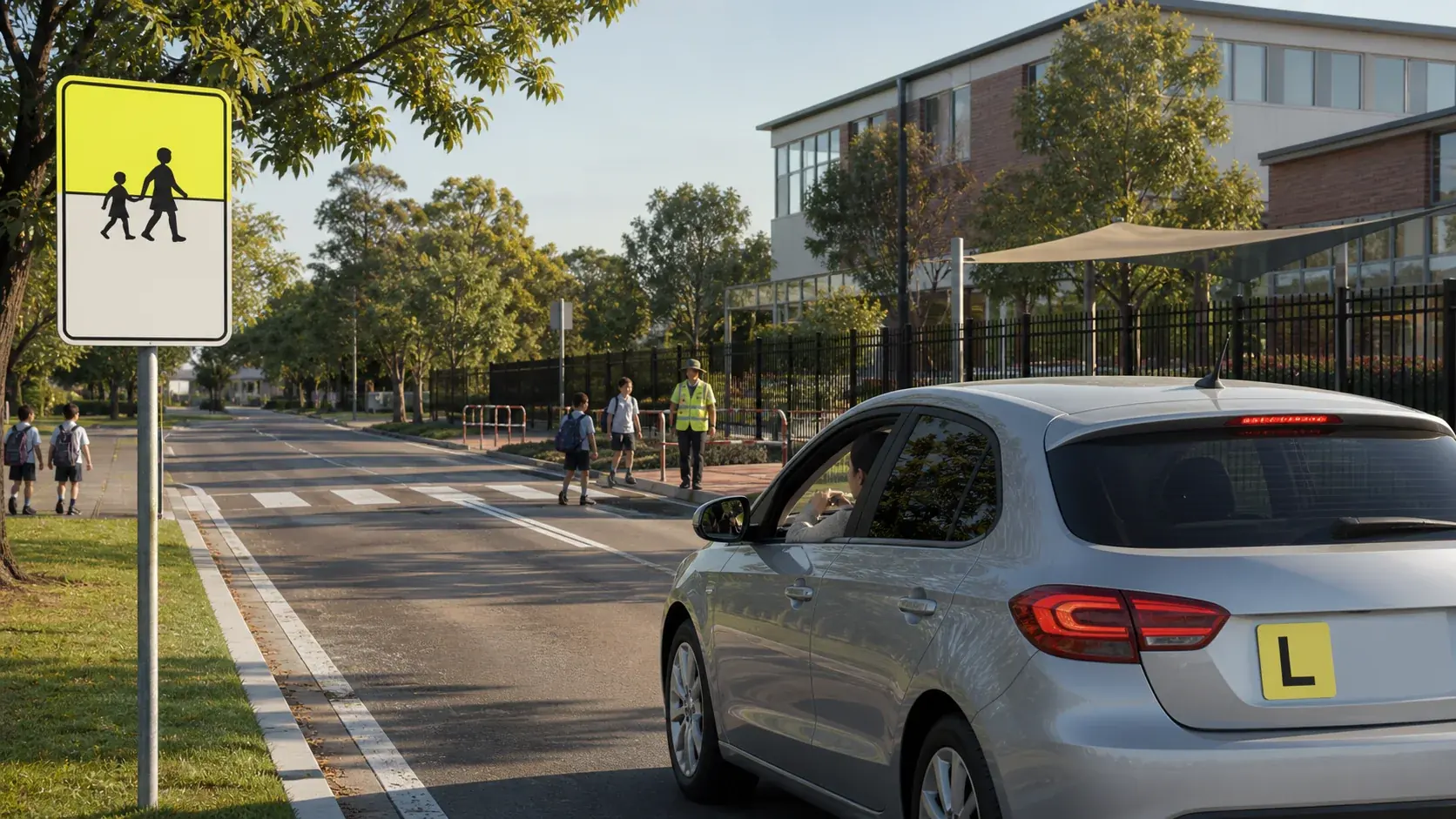
As a learner driver in NSW, mastering road rules is paramount, and understanding school zones is a critical part of safe driving. These zones are designed to protect our most vulnerable road users – children. For both learner drivers and their supervising drivers, knowing when and how to approach school zones correctly is not just about avoiding penalties; it's about fostering a safe environment for everyone. This article from SafeDrive Driving School will clarify the rules, hours, and consequences of not adhering to school zone regulations in New South Wales.
Understanding School Zone Operating Hours and Speed Limits
The standard speed limit in a NSW school zone is 40 km/h. This reduced speed limit is in effect during specific times when children are most likely to be present, typically around school drop-off and pick-up times. It's important to remember that these times are consistent across all gazetted school zones in NSW, regardless of whether a school is public or private.
- Standard operating hours: 8:00 AM to 9:30 AM and 2:30 PM to 4:00 PM on gazetted school days.
- These hours apply even if a school has different start or finish times.
- The 40 km/h limit is clearly indicated by prominent yellow school zone signs, often accompanied by flashing lights.
The Role of Flashing Lights in School Zones
Many school zones in NSW are equipped with flashing lights. These lights serve as an additional visual warning to drivers that the 40 km/h speed limit is in effect. When you see these lights flashing, it's a clear signal to slow down and be extra cautious.
- Flashing lights operate during the standard school zone hours.
- They are designed to capture driver attention, especially in areas with higher traffic volumes or complex road layouts.
- Even if the lights are not flashing due to a malfunction, the 40 km/h speed limit still applies during the gazetted hours. Always rely on the signage and the time of day.
Double Demerits and School Zone Offences
Double demerits are not automatically active throughout ordinary school-zone operating hours. Certain school-zone offences can attract increased penalties, and double demerits may apply during designated holiday periods, including when a school zone is operating. Check the current NSW Government demerit guidance and displayed school-zone signs before driving.
- Double demerits may apply to school-zone offences during designated holiday periods. Check the current NSW Government demerit guidance for the dates and offences covered.
- They also apply to other serious offences like using a mobile phone illegally or not wearing a seatbelt, if committed within a school zone during operating hours.
- For learner drivers, accumulating demerit points can quickly lead to licence suspension, significantly delaying your journey to a P1 licence.
- Supervising drivers are also responsible for ensuring the learner driver adheres to all road rules, including school zone limits. Failing to do so can result in penalties for the supervising driver as well.
Practical Steps for Learner and Supervising Drivers
Practising safe driving in school zones is a key skill for any driver. Here are some actionable steps:
- Plan your route: If possible, try to avoid school zones during peak hours when you are still building confidence.
- Anticipate: Look for school zone signs well in advance. As soon as you see the sign, begin to reduce your speed smoothly.
- Scan for hazards: Pay close attention to the kerb, parked cars, and driveways for any signs of children.
- Maintain safe following distances: This gives you more time to react if a child runs onto the road or a vehicle stops unexpectedly.
- Practise observation skills: Regularly check your mirrors and blind spots, especially when turning or changing lanes near schools.
- Communicate: Supervising drivers should verbally guide learners through school zones, pointing out signs, potential hazards, and reinforcing the importance of the 40 km/h limit.
Navigating school zones safely is a fundamental aspect of responsible driving in NSW. By understanding the operating hours, respecting the 40 km/h speed limit, paying attention to flashing lights, and being aware of the double demerit consequences, both learner and supervising drivers can contribute to safer roads for everyone. At SafeDrive Driving School, we emphasise these critical skills to ensure our students become confident, safe, and compliant drivers.
Official sources
- Road User Handbook — NSW Government
- NSW Driver Licences & Learner Driver Guidelines — NSW Government