
Simple Windscreen Wiper and Washer Checks Before Wet Weather Driving
A quick wiper and washer inspection can help learner drivers maintain a clearer view in rain. Follow this practical pre-drive routine to find streaking, worn blades and washer problems before leaving home.
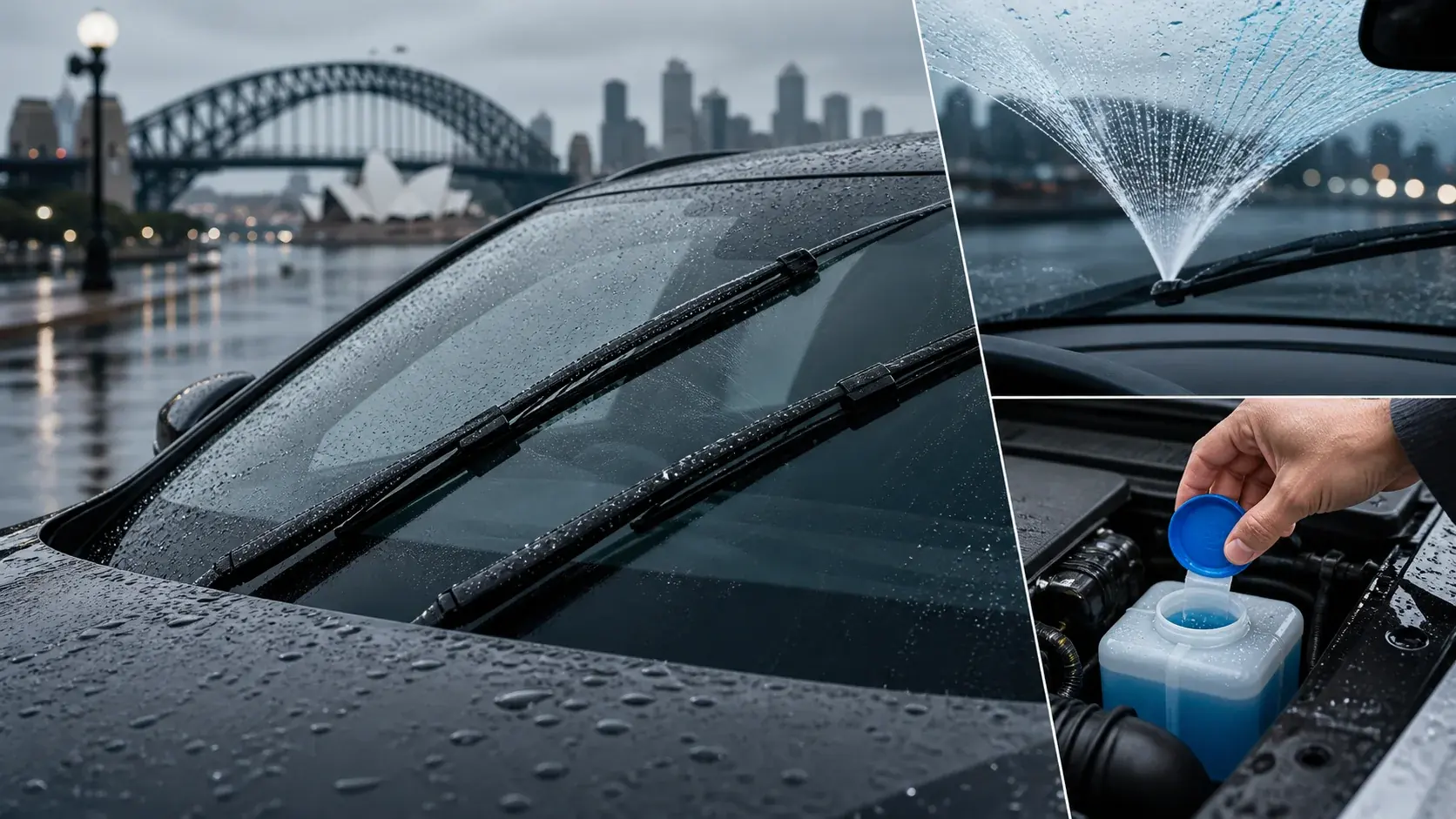
Rain rarely waits until it is convenient. For a learner driver, discovering that the wipers smear the windscreen or the washer bottle is empty after entering busy traffic can add unnecessary pressure to an already demanding drive. A simple check before wet weather arrives takes only a few minutes and can reveal problems while the vehicle is safely parked.
Clear vision is fundamental to safe decision-making. You need to see lane markings, traffic lights, pedestrians, cyclists and changing traffic conditions as early as possible. NSW Government wet-weather guidance advises drivers to take extra care in rain, when visibility can be reduced and roads may be slippery. Good wipers and a working washer system will not remove every wet-weather risk, but they help you maintain the clearest view the vehicle can provide.
Start with a parked-vehicle inspection
Complete your car wiper blade check for wet weather while the vehicle is parked on level ground, with the engine switched off and the parking brake applied. Look through the windscreen from inside first. Dirt, dried insects, oily film and residue can all create glare or smearing once rain and wipers are added.
Next, inspect the windscreen from outside. Look for contamination around the area swept by the blades and check for obvious chips or cracks that may affect your view. If damage concerns you, arrange an assessment by an appropriate automotive glass professional rather than attempting an improvised repair.
Examine each wiper blade without forcing or twisting the wiper arm. If the vehicle allows the arms to be raised normally, support each arm carefully and avoid letting it spring back against the glass. Some vehicles have a special service position for their wipers, so consult the owner’s manual if the arms do not lift easily.
- Check that the rubber wiping edge is continuous rather than split, torn or hanging loose.
- Look for sections that appear hardened, distorted or permanently bent away from the windscreen.
- Check that the blade assembly is securely attached to the arm.
- Remove leaves, twigs or other debris caught around the blades and the lower edge of the windscreen.
- Inspect both front blades and the rear wiper if the vehicle has one.
Test the wipers for streaks, noise and missed areas
After the visual inspection, sit in the normal driving position and test the wipers using washer fluid. Avoid testing on dry glass because loose grit can be dragged across the surface. Make sure the area around the vehicle is clear before switching on the ignition or starting the vehicle as required by its operating instructions.
Watch the full swept area rather than focusing only on the centre of the glass. A serviceable blade should move smoothly and leave a view that clears quickly. One minor streak may come from contamination on the rubber or glass, but persistent smearing after cleaning can indicate that a blade needs replacement.
- Streaks or a cloudy film that remain directly in your line of sight.
- Wide sections of water left behind on each pass.
- Chattering, skipping or shuddering instead of smooth movement.
- Squeaking that continues after the windscreen is properly wet and clean.
- A blade end lifting away from the glass.
- Wipers moving unusually slowly, stopping in the wrong place or failing to operate.
Clean the windscreen and blade edges using products and methods suitable for the vehicle, then test again. If the problem continues, replace the affected blades with the correct type and size or ask a qualified repairer for assistance. A movement fault, electrical problem or loose wiper arm needs more than a new rubber blade and should be assessed properly.
Check the washer reservoir and spray pattern
Wipers are only one part of the system. Washer fluid helps clear road grime and spray that rain alone may not remove. Find the washer reservoir by following the owner’s manual rather than guessing, especially if you are unfamiliar with the vehicle. The cap commonly carries a windscreen symbol, but under-bonnet layouts differ between models.
Check the level and top it up with a washer product suitable for the vehicle, following both the vehicle and product instructions. Do not confuse the washer reservoir with coolant, brake fluid or any other under-bonnet container. If you cannot identify it confidently, ask an experienced person or automotive professional for help.
- Confirm that fluid sprays onto the useful swept area of the windscreen.
- Check whether all washer jets operate rather than only one side.
- Look for a weak, uneven or misdirected spray.
- Listen for the washer pump if no fluid appears.
- Check beneath the vehicle and around visible hoses for an obvious leak after operating the washers.
Do not push pins, wire or other objects into washer nozzles unless the vehicle manufacturer specifically describes that procedure. It is easy to damage a nozzle or alter its aim. If the reservoir is full but the washers do not work, arrange further diagnosis rather than repeatedly operating the pump.
Prevent wiper streaks before they become distracting
Streak prevention begins with a clean windscreen. Washing only the obvious dirt from the outside may leave a greasy film, while residue on the inside can worsen glare from headlights and street lighting. Use an automotive glass-cleaning method that is appropriate for any tint or coating fitted to the vehicle.
Avoid using the wipers to scrape away heavy dirt, leaves or other material. Remove contamination safely while parked. Also avoid applying unapproved dressings or household products to the blade rubber, as they may cause smearing or affect the material. Follow the blade manufacturer’s care instructions where available.
- Clean the exterior windscreen, including the edges of the wiper sweep.
- Clean the inside surface to remove haze and fingerprints.
- Wipe contamination from blade edges using an appropriate method.
- Refill washer fluid before a longer drive or forecast rain.
- Recheck the system after washing the car or replacing a blade.
- Keep the area below the windscreen free from accumulated leaves and debris.
Make the check part of your wet-weather routine
A learner driver should not treat the wiper check as a substitute for adjusting to rain. Before leaving, consider whether visibility is adequate and whether severe conditions make delaying the trip the safer option. Once driving, follow NSW wet-weather guidance, reduce speed appropriately for the conditions, increase the space between your vehicle and the one ahead, and avoid sudden braking, acceleration or steering.
Supervising drivers can make this inspection a useful learning exercise. Ask the learner to identify the controls, operate each wiper speed, check the washer spray and explain what poor blades look and sound like. This builds familiarity before the controls are needed in traffic. The supervisor should still confirm that the vehicle is roadworthy and that any identified fault is addressed.
Final takeaway
A brief parked check can prevent a small maintenance issue from becoming a major distraction in rain. Inspect the blade rubber, test for streaks and missed areas, confirm the washer fluid level and check that the jets spray correctly. If the view does not clear properly, fix the problem before driving into wet conditions. For learners across Blacktown and Western Sydney, making this routine part of every wet-weather preparation is a practical habit that supports calmer, safer driving.
Official sources
- Safe driving in wet weather — NSW Government